
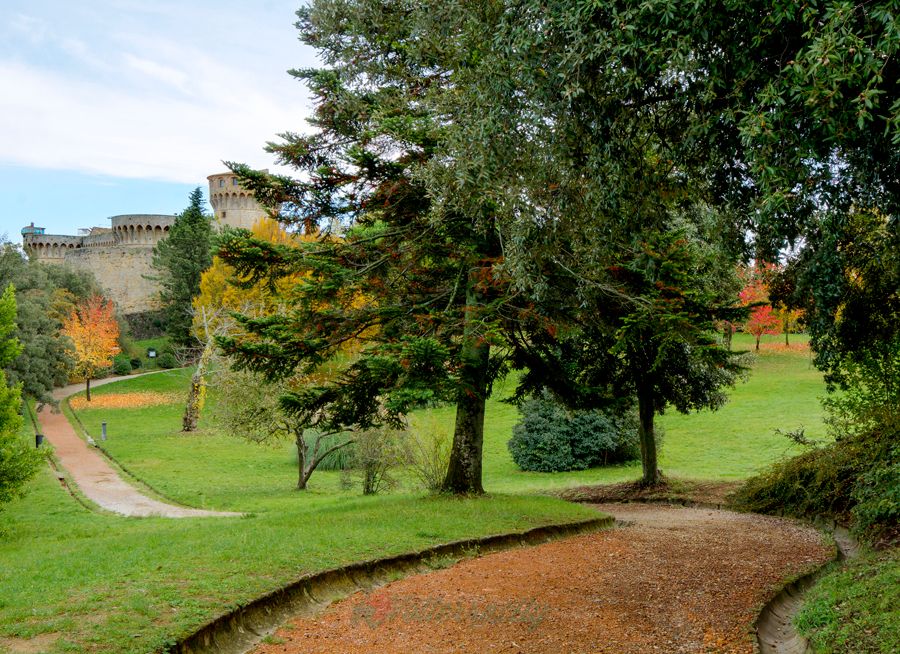
Volterra is a city rich in history, artistic beauty, and architecture. There are numerous museums, churches, and historic sites to visit. Even just wandering around the city, and the historic center in particular, is a pleasure: the cloisters, streets, buildings, and grand squares reveal a medieval and Renaissance-style city unlike any other in Italy.
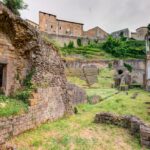 Roman Theater
Just outside Volterra's current Porta Fiorentina, excavations conducted in the 1950s by Enrico Fiumi uncovered an Imperial-era theater, one of the most beautiful and best-preserved in Italy. During the Middle Ages, in the 13th century, the building was cut in two by the city walls, which placed their foundations on the upper section of the cavea, encompassing the entrance area to the theater itself, which is no longer visible today.
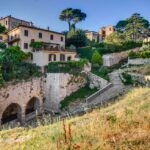 Sources of San Felice
Volterra is rich in water sources, and this one is certainly among the most evocative in the area. It offers a beautiful medieval view, a glimpse into times gone by, and a concentration of interesting details.
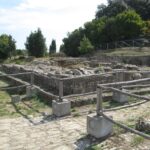 Etruscan Acropolis
The Etruscan acropolis It is located on top of the hill at one end of the park near the Medici fortress, called Enrico Fiumi Park. It is an area that includes buildings from various eras, from the Etruscan to the Roman and medieval, all built in religious purpose. There are the remains of a cistern for collecting rainwater, of an Augustan pool and of two buildings in the shape of templenicknamed A and B: the first rectangular one dates back to the 2nd century BC, while the second one to the 3rd century AD, characterised by a stage with columns.
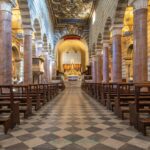 The Cathedral
The Duomo, or Cathedral of Santa Maria Assunta, is the main icon of the Diocese of Volterra, the largest Catholic administrative district in Tuscany, encompassing twelve municipalities. There are many churches, almost all of which are open to the public, but visiting them all becomes monotonous and exhausting. This church is definitely worth a visit, along with the adjacent Baptistery and the small museum of the Archconfraternity of Mercy of Volterra. All of this is located in Piazza San Giovanni, the religious heart of the city.