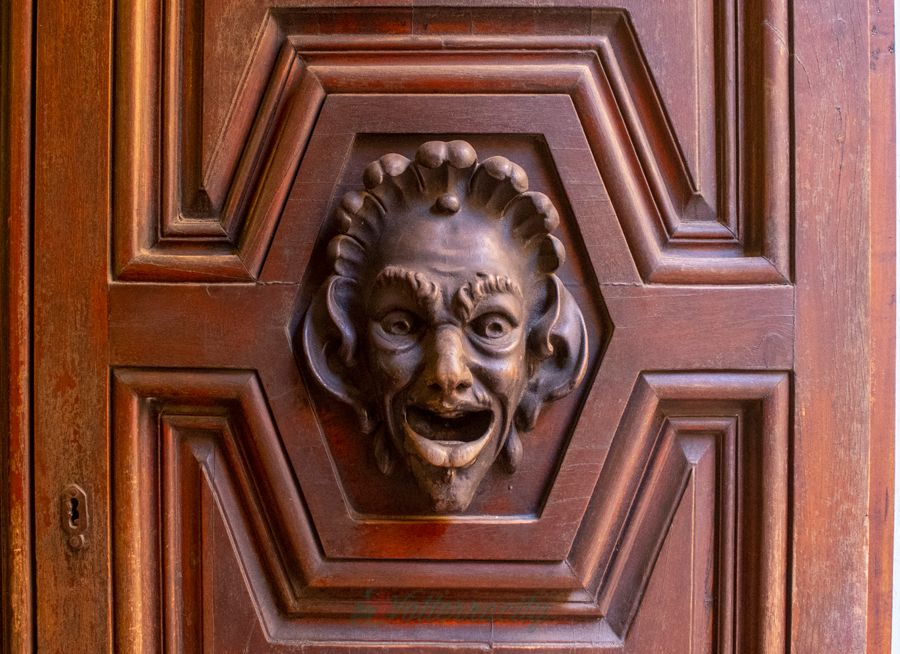
Walking through the streets of the historic center of Volterra can reveal, to the most curious eyes, some nice surprises! Have you ever discovered the art hidden behind door knockers?
Knocker, clapper, mallet or knocker; since man felt the need to protect himself and his possessions inside a house, not only the need to close was born, but also the opposite need, that of to notice anyone who wanted to signal his presence outside the home and thus allow him to enter. This led to the invention of a special instrument, perfected over time and called a knocker or knocker.
Originally the door knocker consisted of a simple shape, a hammer or an iron ring. Only as time passed, it began to become a true object of art, with a refined shape and dual function: to warn of the arrival of a visitor and to decorate and beautify the doors.
In the nineteenth century, in the neoclassical era, many models of cast iron door knockers with various shapes became widespread: some examples are inspired by ancient Egypt, such as those with the sphinxes, others suggested by the animal world, such as lions or jellyfish, and others still to floral decoration, with a woman's head or representing a handin the very act of knocking on the door.
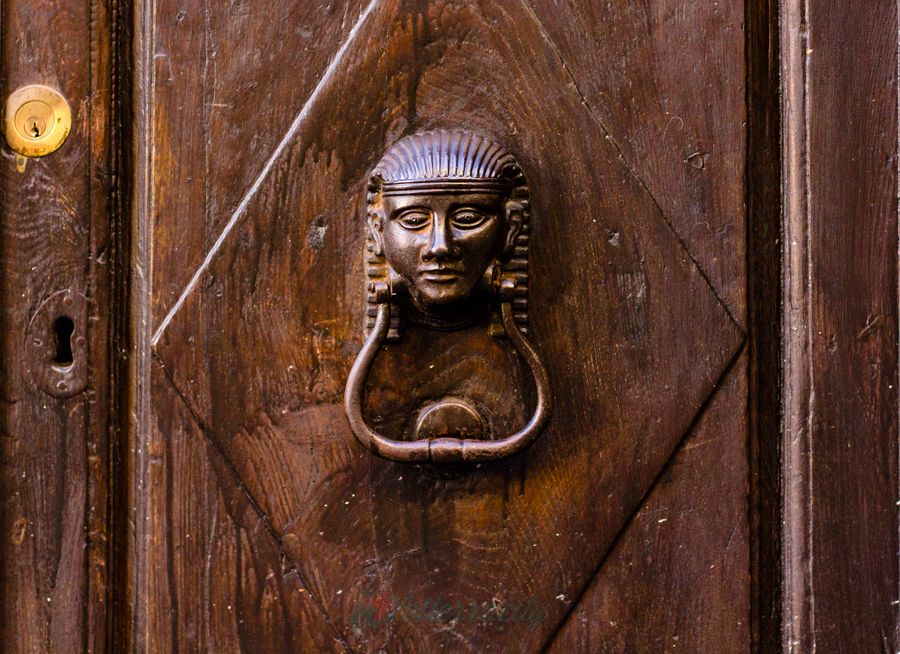
Furthermore, since ancient times, door knockers, in addition to their normal function of signalling one's presence outside the home and of helping in closing often very heavy doors, have been given a magical function.
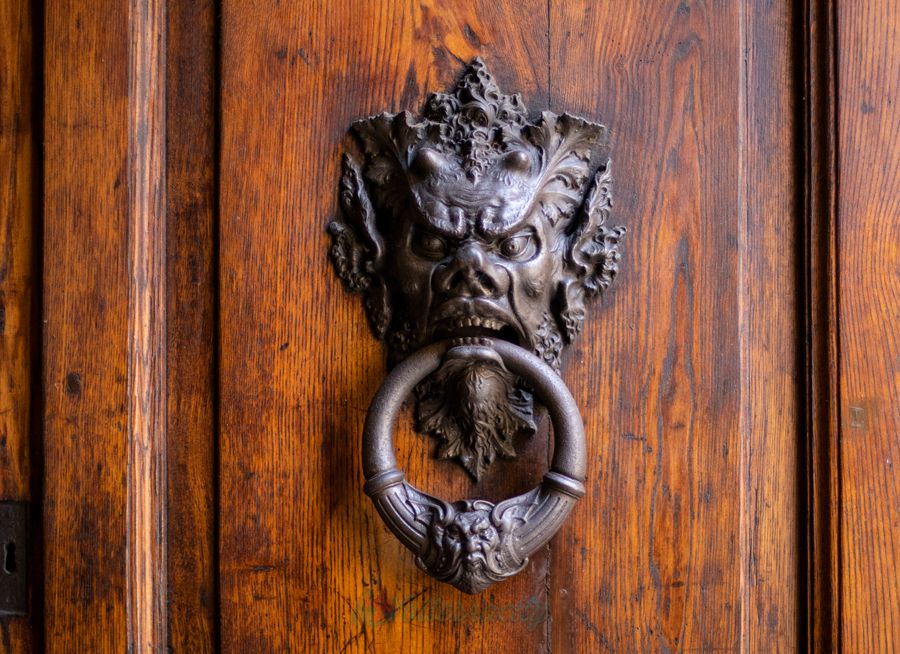
They are attributed the prodigious power to ward off and nullify bad influences that could harm the house and its inhabitants. For this reason, most of the depictions of the doors show threatening human faces or wild animals.
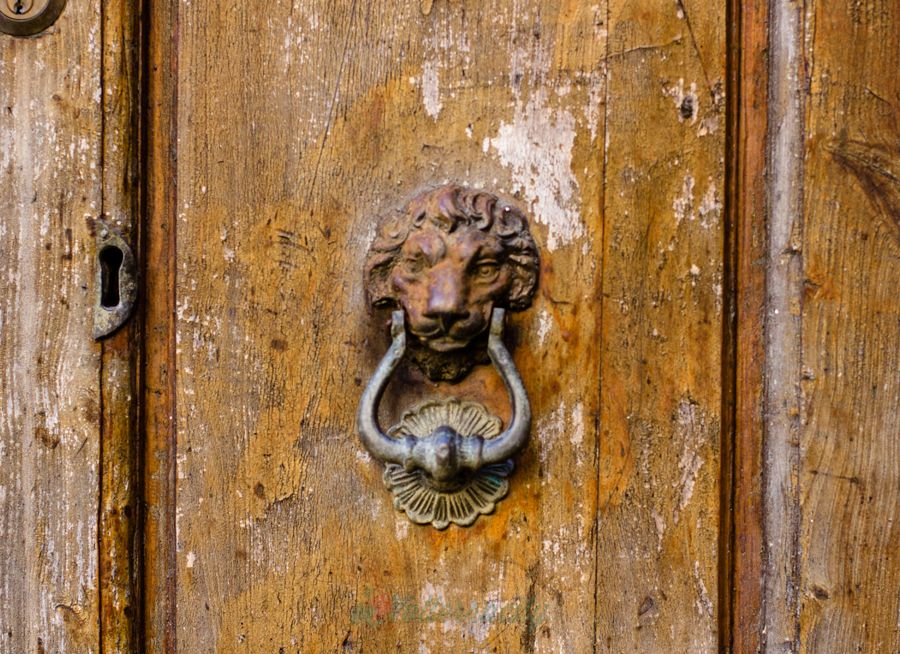
Furthermore, since ancient times, door knockers, in addition to their normal function of signalling one's presence outside the home and of helping in closing often very heavy doors, have been given a magical function.
They are attributed the prodigious power to ward off and nullify bad influences that could harm the house and its inhabitants. For this reason, most of the depictions of the doors show threatening human faces or wild animals.
FAUNS
On Via Sarti, above the entrance to the renowned Palazzo Viti, stands a door knocker with a hellish face. A demon, a devil with leaf-like contours, who once, before the fall of the old religions, may have represented a Roman faun, a horned deity protecting nature. Since the dawn of time, man has always needed to pray to a deity capable of protecting him, and it's curious to know that the first god the human race invoked for such purposes was precisely a horned god. He offers protection!
MEDIEVAL RINGS
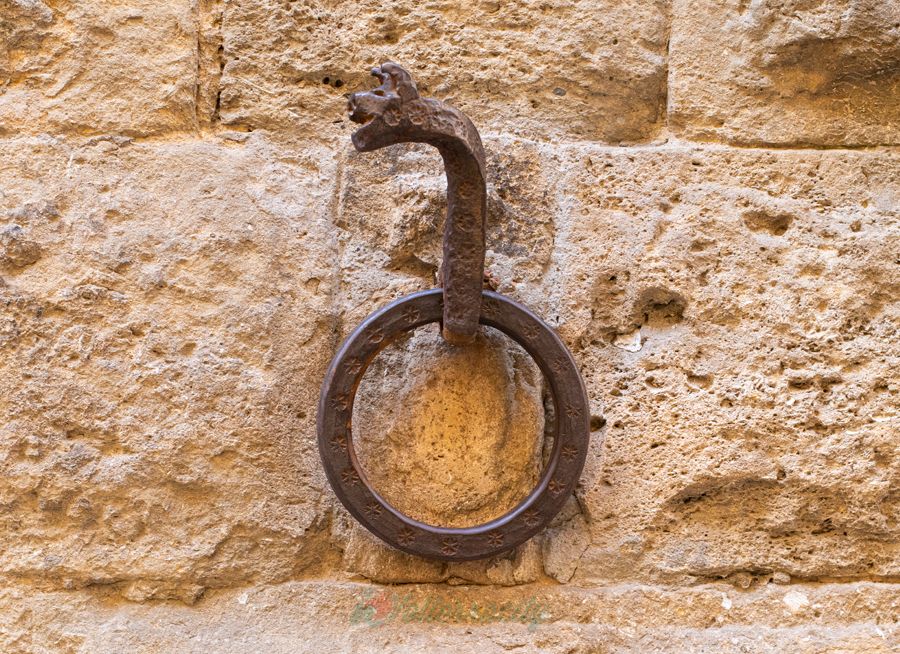
The doors, as well as many other decorative elements, are a very clear example of how The outdoor furnishings of homes and street furniture are inseparable elements of the same reality. To the most attentive eyes, Volterra has many details to reveal; also curious are the big rings medieval and nineteenth-century ones that we see set in the stone walls bench. They are details that tell the story, which in ancient times were they tied up the horses and mules while strolling downtown. Many are on Via Buomparenti, others on Via Matteotti.
SATYRS
Try to go into the narrowest alleys or simply observe the main streets more carefully, you will find many interesting and sometimes incredible details. The Guarnacci Museum, a must-see to better understand the city, for example it shows a door with two figures demonic similar to each other. Little is known about these figures, but they look like satyrs: the pointed ears and the floral crown extending across the forehead arouse curiosity, while the piercing eyes and open mouth arouse disquiet.