What to see in Volterra if you only have two days? You can find out by reading our guide, starting with our 12 suggestions for the first day. We've written a separate article on this, so you can continue reading here and consider our suggestions for the second day.
STAGE 1: PIAZZA DEI PRIORI
STAY 20 MINUTES
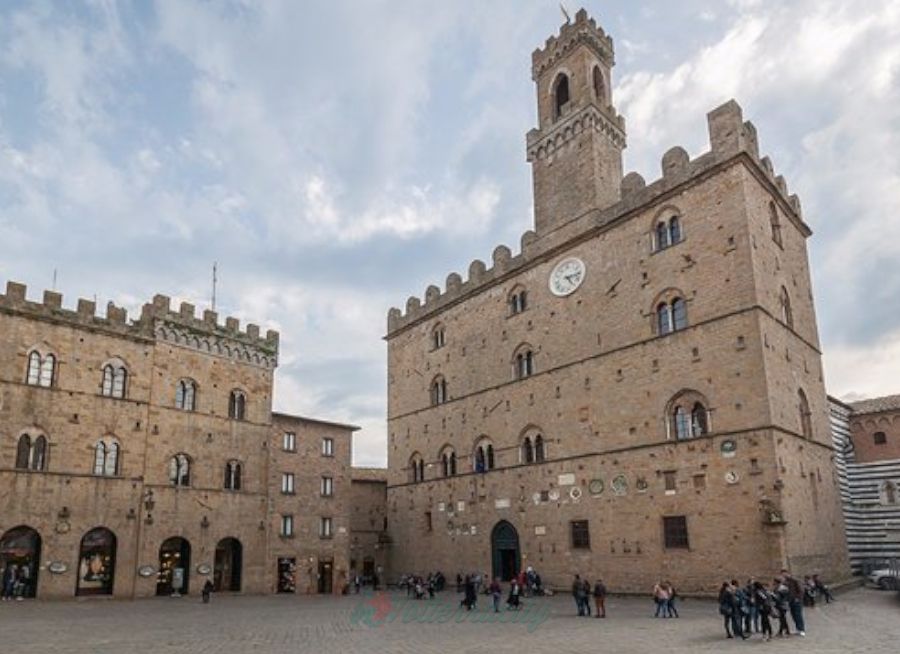
The first stop on your tour is Priors' Square. It can be reached on foot in 5 or 10 minutes from the city walls; it all depends on which of the seven gates you choose to enter, but it doesn't matter. Piazza dei Priori is a fascinating place to admire the vastness and richness of the Florentine epic. A medieval cross-section to be contemplated on one of the low walls near the Palazzo dei Priori: that's what the people of Volterra would do, who, when the shade falls on us, spend the whole time dozing and chatting.
Take all your time to admire the bench drafts with the set shells, the coats of arms and embellishments of the grandeur of Florence; then go to the Tourist Consortium to purchase the Volterra Card. The office is still in the square, on the right side of Palazzo dei Priori. Don't forget to also ask for the free map of the historic center.
With a small digression I remind you that you can also take advantage of a great free App for iOS and Android: Volterra App. With it, you can discover all the points of interest, both commercial and cultural. It's currently the most detailed independent guide to the area, curated down to the smallest details.
Without any convincing Volterra Card It is advantageous for many reasons: with it you can visit many of the most important paid cultural sites in the Municipality of Volterra: they are absolutely worth seeing, they are the essence of the city.
STAGE 2: PALACE OF THE PRIORS
STAY 40 MINUTES
The Palace of the Priors it's a must see.Entering the palace, you find yourself in an atrium, along the back wall of which begins the steep staircase leading to the upper floors; on the right, a small door leads to a cloister with a well filled with coins from all over the world. Inside the palace, the Middle Ages and the Renaissance reign supreme.
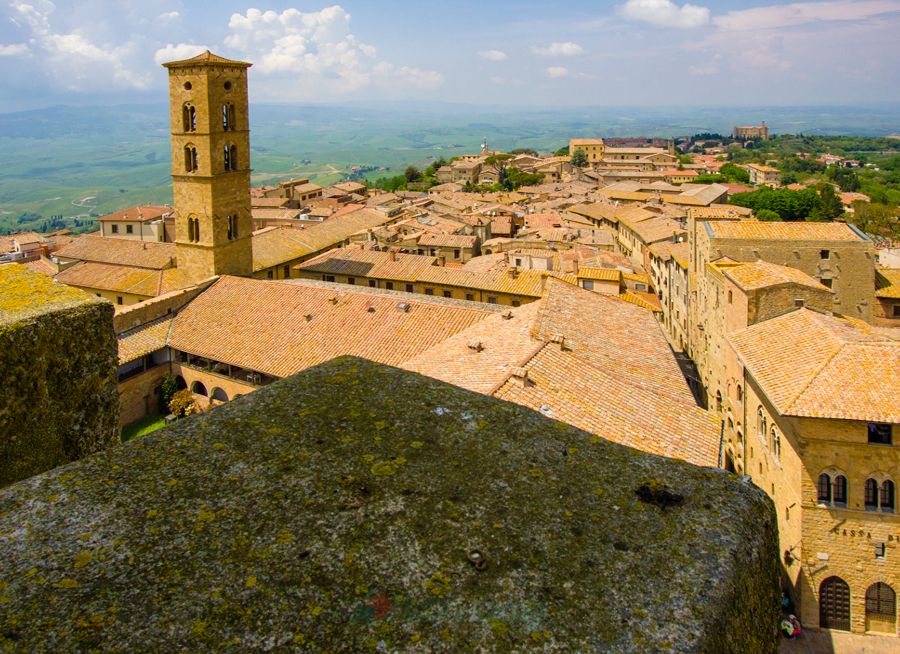
Reach the Hall of the Great Council on the second floor and, if you don't suffer from claustrophobia or vertigo, also visit the bell tower on the top floor. The views from the tower are incredible! A significant line may form to visit the tower, as access is limited to six people at a time: space is very limited. However, while you wait, you can enjoy the art exhibitions that, depending on the season, fill the austere spaces of the palace.
STAGE 3: THE CATHEDRAL AND THE BAPTISTERY
STAY 40 MINUTES
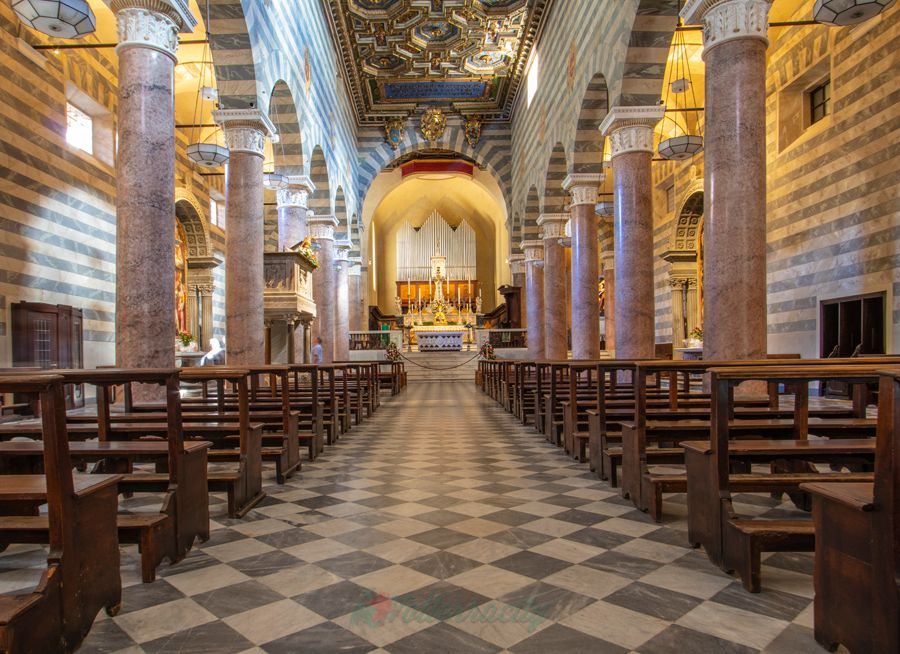
Once you've descended from the Palazzo dei Priori, you can reach the adjacent Piazza San Giovanni via Via Turazza. The square is located directly behind the Palazzo dei Priori. There are two points of interest in the square: the Cathedral of the largest Diocese in Tuscany and its Baptistery. Sacred places, open to the public and of great majesty. Looking around is important, however, as the square reveals other gems: for example the lodges of the Hospital of Santa Maria and the small museum of the Archconfraternity of Mercy, where they display the old tools of the trade of the Misericordia itself.
STAGE 4: ALABASTER ART GALLERY AND ECOMUSEUM
STAY 1 HOUR
Return to the beginning of your route, but this time continue along Via Roma; Via Roma and Via Turazza are two parallel streets that connect the two opposite squares: Piazza dei Priori and Piazza San Giovanni. Although Via Roma lacks any obvious landmarks of great importance, it remains photogenic. Looking up at the bell tower and arch of Torre Bonfili is a thrilling sight. There's also another interesting view: on the left side of the street, a majestic doorway grants you access to Palazzo Fattorini. Inside, a small cloister with a fountain awaits you for a photo opportunity. Very intimate and romantic.
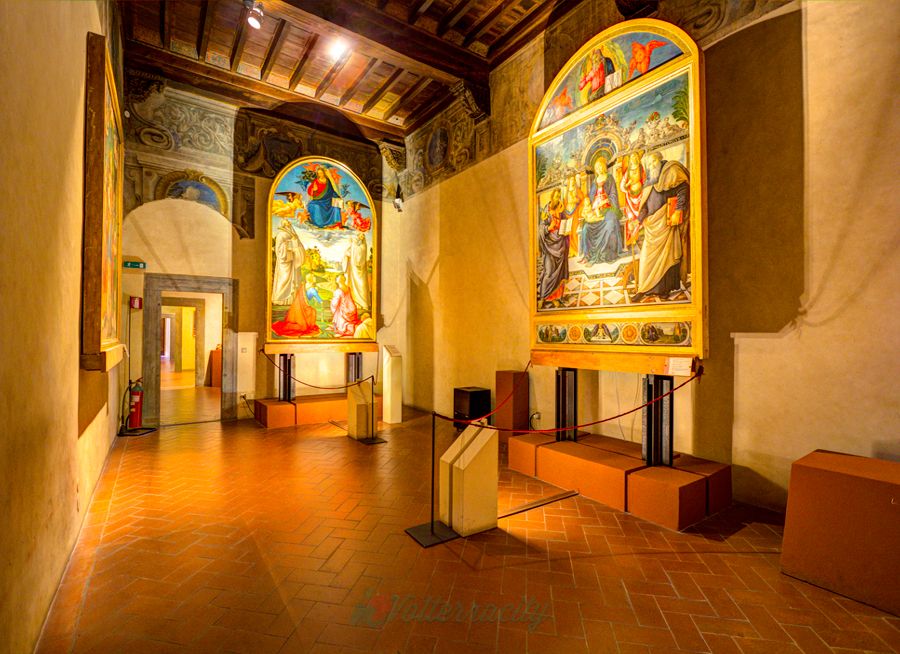
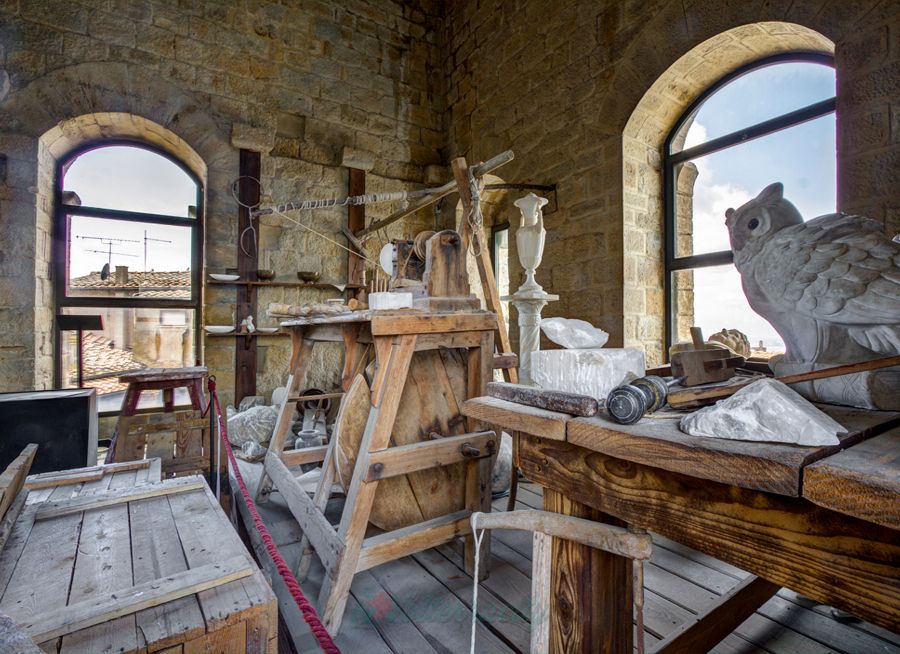
Continuing along Via Roma, continue on Via Buomparenti, towards the Bonfili Arch, and stop in Piazza Minucci. Here you can visit the Art Gallery and the Alabaster Ecomuseum. Both museums are housed under the roof of Palazzo Minucci Solaini, the only palace in Volterra to retain its Renaissance appearance almost intact. The Pinacoteca houses many valuable works, including Rosso Fiorentino's Deposition, while the Alabaster Ecomuseum is an interesting place to discover the history of the processing and marketing of alabaster.
STAGE 5: ROMAN THEATRE
STAY 20 MINUTES
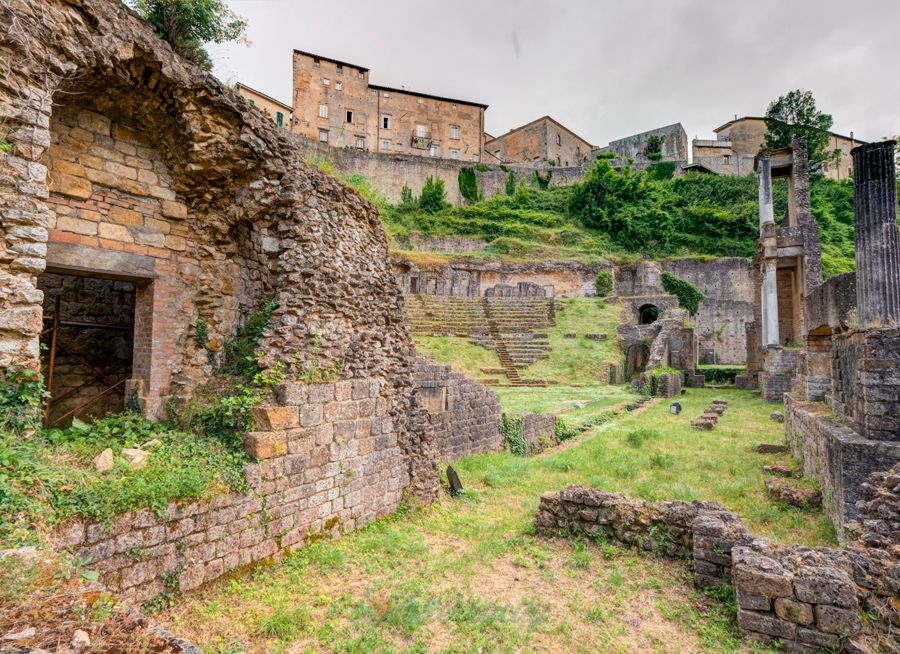
One last effort and the morning can end beautifully. From Piazza Minucci, continuing toward Piazzetta della Pescheria, you'll reach Via Lungo le Mura del Mandorlo. Here you can admire a wonderful view: the Church of San Giusto on the horizon and the Roman Theater nestled against the walls. The archaeological area of Vallebuona It is one of the most important sites where it is possible to understand the urban and historical evolution of Volterra, and obviously deserves a more careful visit: visiting it from its inside. Access to the historic site is a little out of the way. Porta Fiorentina, on the left.
STAGE 6: ENRICO RIVERS AND ACROPOLIS PARK
STAY 1 HOUR AND 30 MINUTES
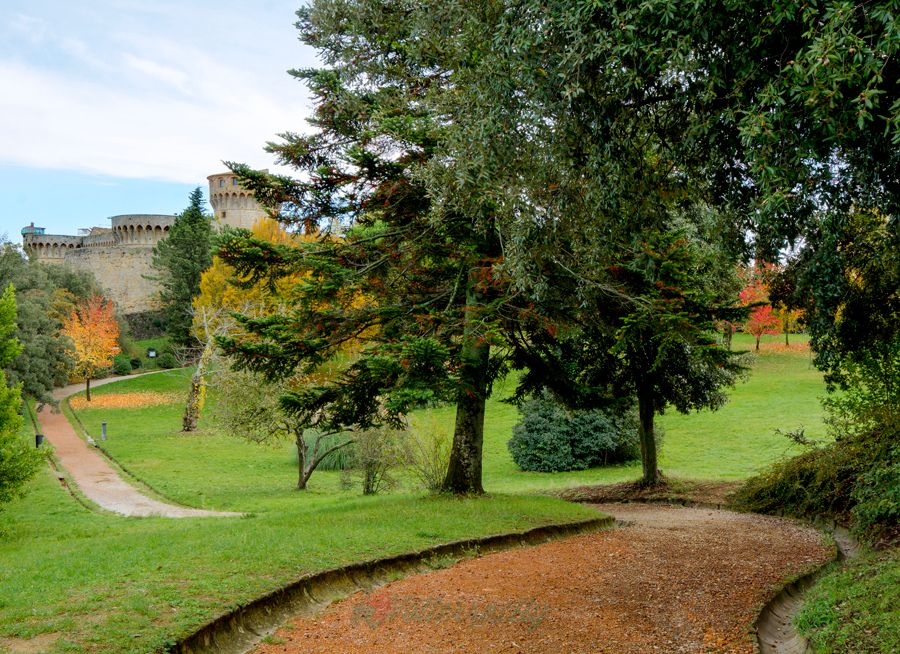
After your snack, unwind with a nap "in the castle," as residents call the city's main public park. Enrico Fiumi Park: a destination for strolls, soccer games, and picnics; it's here that Volterrans and visitors alike meet, all watched over by the imposing walls of the Fortress, which enclose the park to the east, and protected by the spirituality emanating from the ruins of the Etruscan temples, slumbering on the south side. Be sure to take time to admire the acropolis and the Roman pool. To avoid disappointment (which would be wrong), you should know that you can only see the foundations of the buildings and a beautiful glimpse of the colossal Palazzo dei Priori.
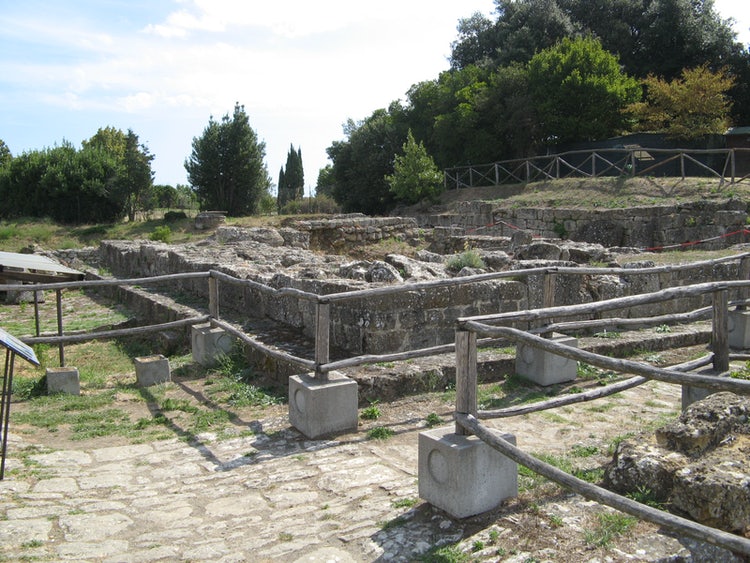
STAGE 7: GUARNACCI ETRUSCAN MUSEUM
STAY 1 HOUR
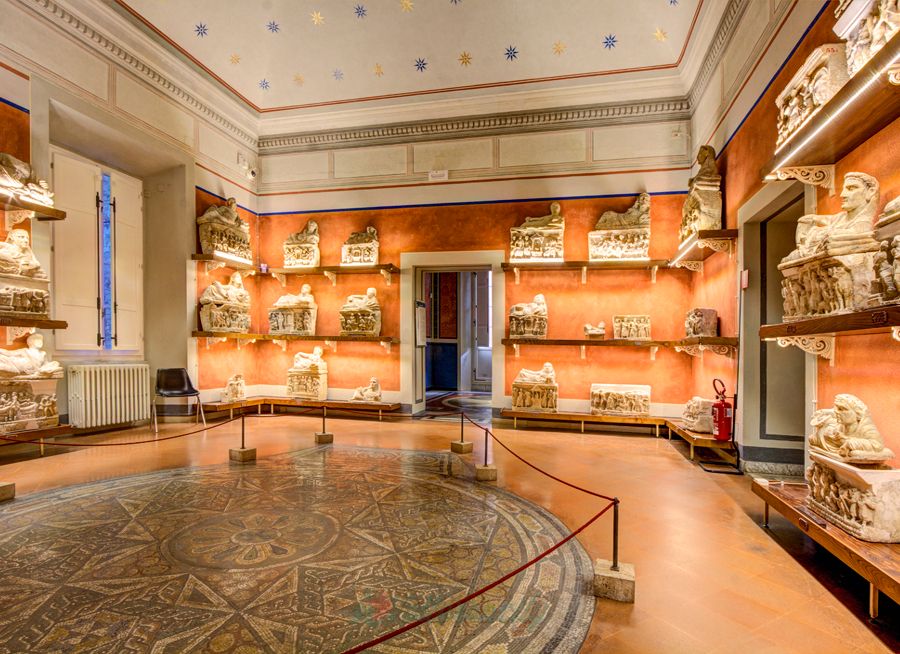
Descending the public park on the opposite side—there are two main entrances; entering from one side and exiting from the other—you continue along Via Don Minzoni, home to the Guarnacci Etruscan Museum. The Guarnacci Etruscan Museum contains one of the finest collections of Etruscan art. The museum displays the largest collection of Etruscan urns in the world, as well as renowned works such as the Stele of Avile Tite, the Shadow of the Evening, the Urn of the Spouses, and the Lorenzini Head. The museum is a museum within a museum: it is one of the oldest museums in Europe, and everything has been preserved as intended by 20th-century aesthetics, from the walls to the flooring.
STAGE 8: GATE TO THE ARCH
STAY 20 MINUTES
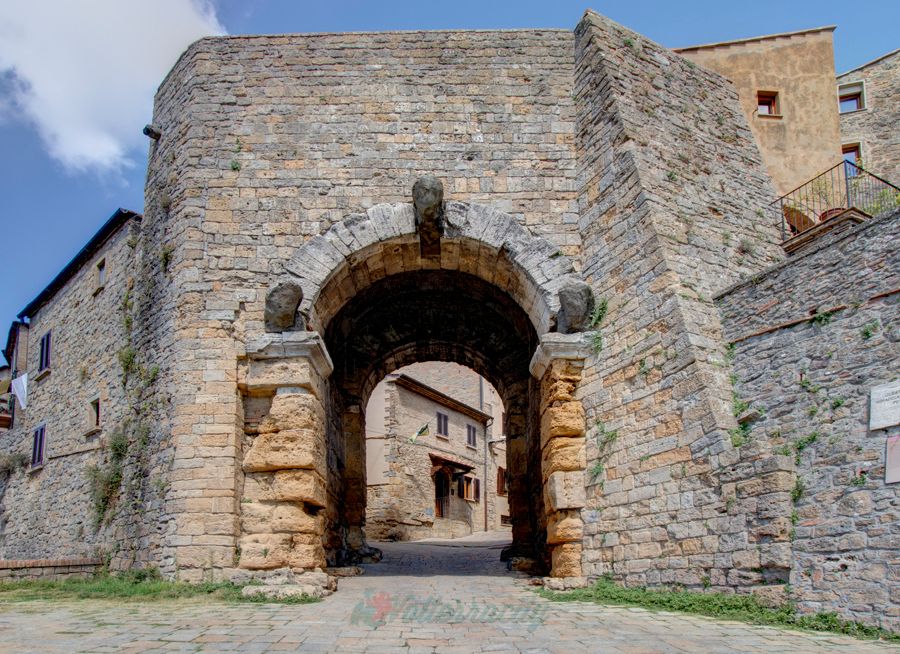
We're in the final contemplation. At the top of Via Guidi, the steep descent of Via della Porta all'Arco awaits you—which becomes a very strenuous climb on the way back. This street is the first stretch of a road that crosses Volterra from south to north. It is one of the oldest roads in the entire city and corresponds to part of the Cardo Maximus. The most emblematic monument on this street is the Porta all'Arco, the main architectural symbol of the Etruscan city. The gate is characterized by a stone ashlar arch decorated with three heads inserted into its structure. Since time has erased the details of these faces, it's difficult to know exactly what they represent: some believe they may be Jupiter, Juno, and Minerva.
STAGE 9: THE BRIDGES' ARROW
STAY 30 MINUTES
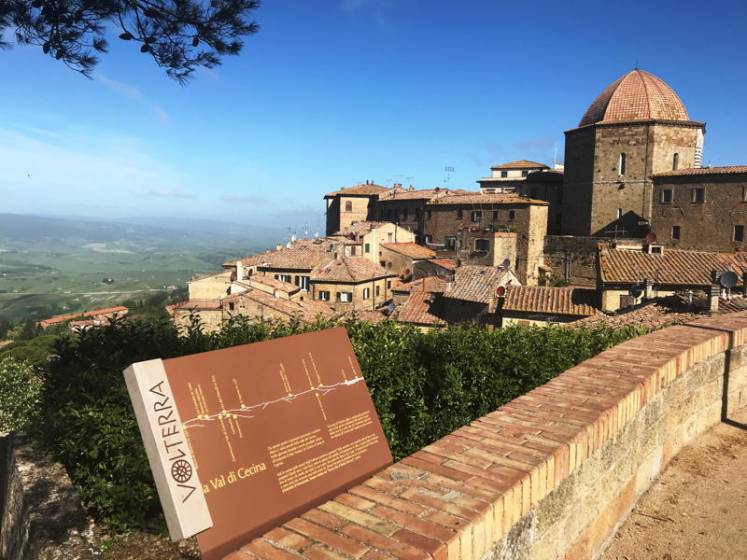
The people of Volterra have places dedicated to meetings and initiatory chats between people who share everything and who feel like one big family: the walls of Piazza dei Priori, already mentioned, and the parapets of the Bridges. Viale dei Ponti is the last destination of this day. From here you have access to the most accessible part of the panorama, in a 180-degree arc that goes from the Apuan Alps to Amiata, with the sea, the islands, the sunsets. I must point out that our panorama has the mischievous and carefree character of the Volterrans themselves: he shows himself in his entirety as and when he likes and especially as regards the Tyrrhenian Sea with Capraia and Cape Corso, which is about 120 kilometres away as the crow flies, he takes too much advantage of the fogs and mists. In any case, the show remains wonderful.
STAGE 10: STACCIOLI CIRCLE
STAY 20 MINUTES.
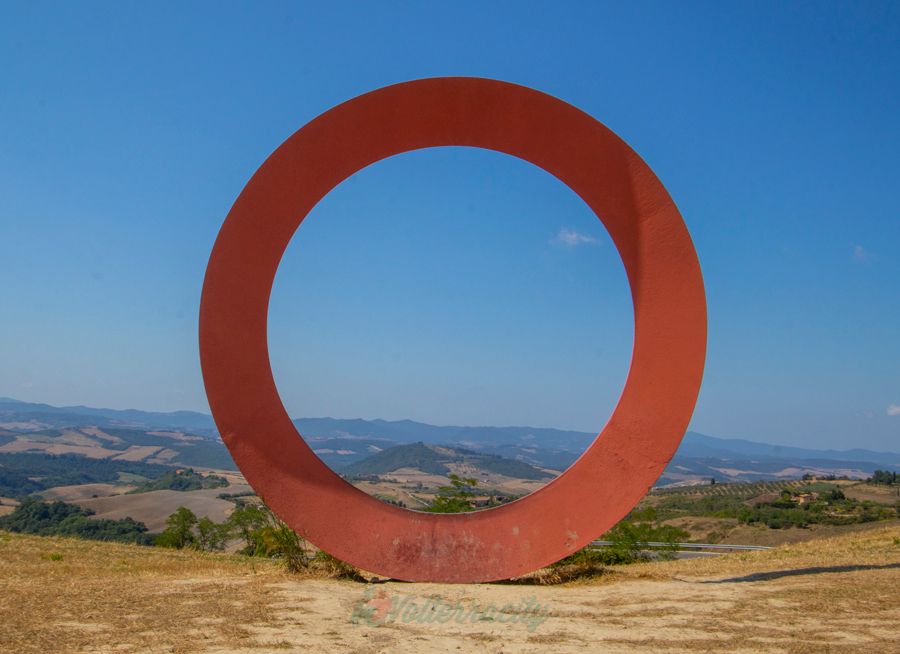
On the return journey, provided you're there at sunset or before sunset, I recommend stopping, even if only briefly, on the outskirts of Volterra. If you're heading towards Siena or Florence or towards Cecina, the best stop is along the road near the works of Volterra native Mauro Staccioli, the father of contemporary art. This is the’Ring in the locality of Poggio di San Martino or de The Boldria and of the Full round, the latter two placed a short distance from each other. All three are quintessential Stacciolian signs, slowing down the pace of passers-by and inviting them not only to see but to watch, or to contemplate the scenario enclosed within these frames.
STAGE 10: BALZE
STAY 30 MINUTES
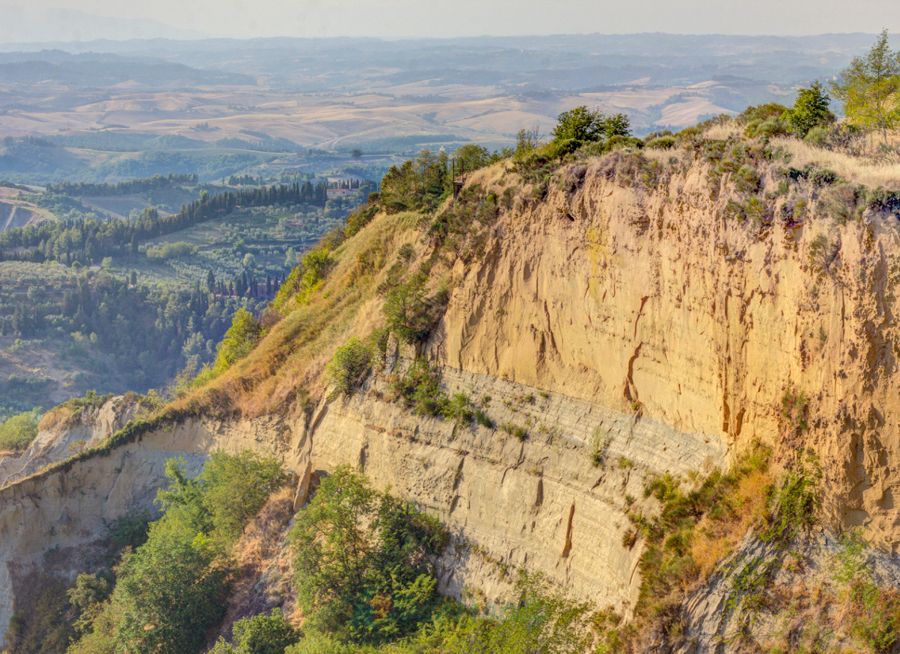
If you continue towards Pisa, the slope, which unfortunately lacks artistic circles, you can take advantage of an alternative stop. Park in the Borgo San Giusto square and enjoy the magnificent view before you. It's the distinctive and haunting landscape of the Balze, a towering chasm that once swallowed up the city's Etruscan necropolises and several medieval buildings, including the monastery of San Marco and the church of San Clemente. A high cliff where you can bid a final farewell to the city in awe.
DAY 2
STAGE 1: THE BAR MEETING
STAY 30 MINUTES
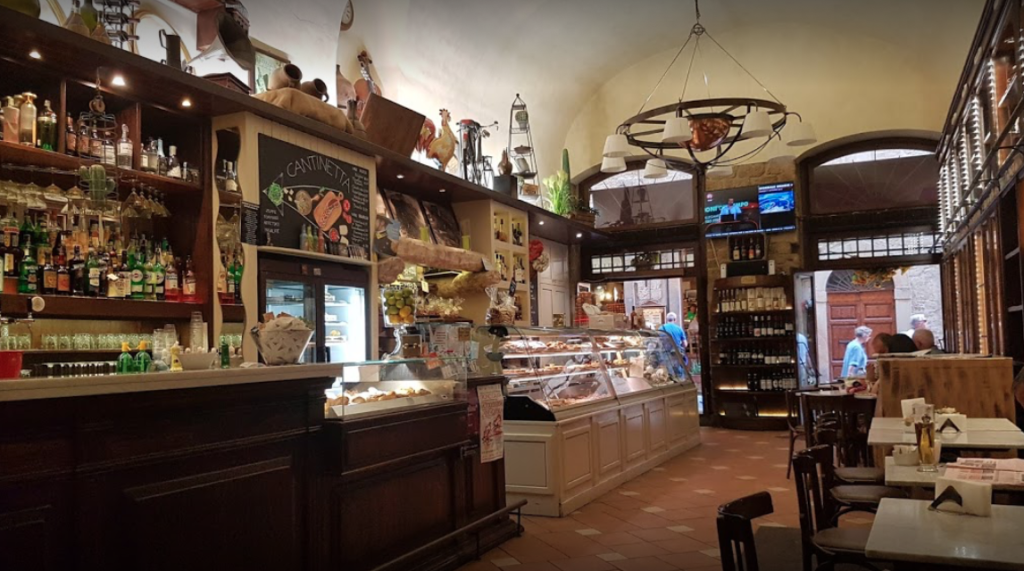
The second day is wonderful if you wake up early, because the initial stage begins with a hearty breakfast in one of the central and most beautiful places in the historic center. The city expands with its ups and downs past shops and small shops, but L'Incontro Bar shows off its grandeur. Consider that this place used to be, as its shape shows, an open-air alley with a beautiful stone doorway. Today, the doorway divides the large room from the small room and is adorned with a myriad of vintage and world accessories: license plates, banknotes, instruments. A pastry shop first and foremost, but also a cocktail bar for evening aperitifs.
STAGE 2: MEDICI FORTRESS
STAY 1 HOUR
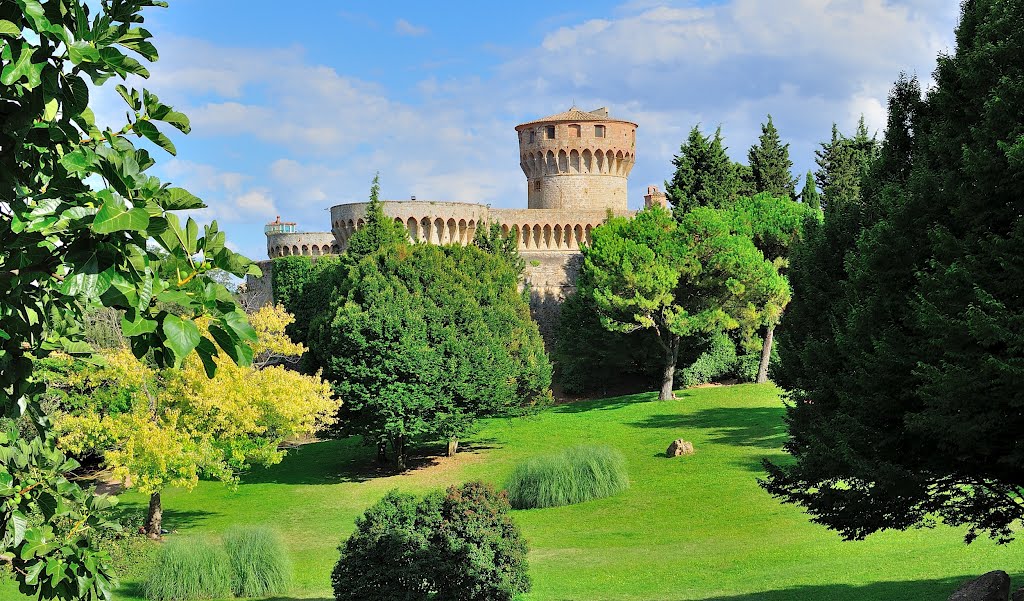
The tower of the Medici Fortress is absolutely not to be missed. The fortress, which stands on the highest point of the city, has an enchanting appearance and a medieval feel, but is actually a large maximum-security prison. Although it has this dark and, for some, unexpected side, there is a wing of the structure accessible, where a small tourist circuit unfolds. From the tower of the Keep you can enjoy a fairytale view, one of the largest and most wonderful horizons of Italy; at its feet the River Park, the city, the villages, further on the gentle hills and castles that embrace it as far as the eye can see, the smoke from the chimneys and the steam of Larderello, the snow-capped mountains of the Apennines and the sea.
STAGE 3: DIOCESAN MUSEUM OF SACRED ART
STAY 40 MINUTES
The nearby Church of Sant'Agostino is one of the many churches in the Diocese of Volterra, but unlike the others, it stands out for its function. Although still consecrated, it houses a brilliant museum filled with the treasures of Tuscany's most important Catholic power. A museum of sacred art that intrigues even the most agnostic. After all, beyond one's beliefs and religions, it is a jewel in Volterra's history and in Italy's history, strongly influenced by Christianity. Silence and tranquility are the hallmarks of this point of interest.
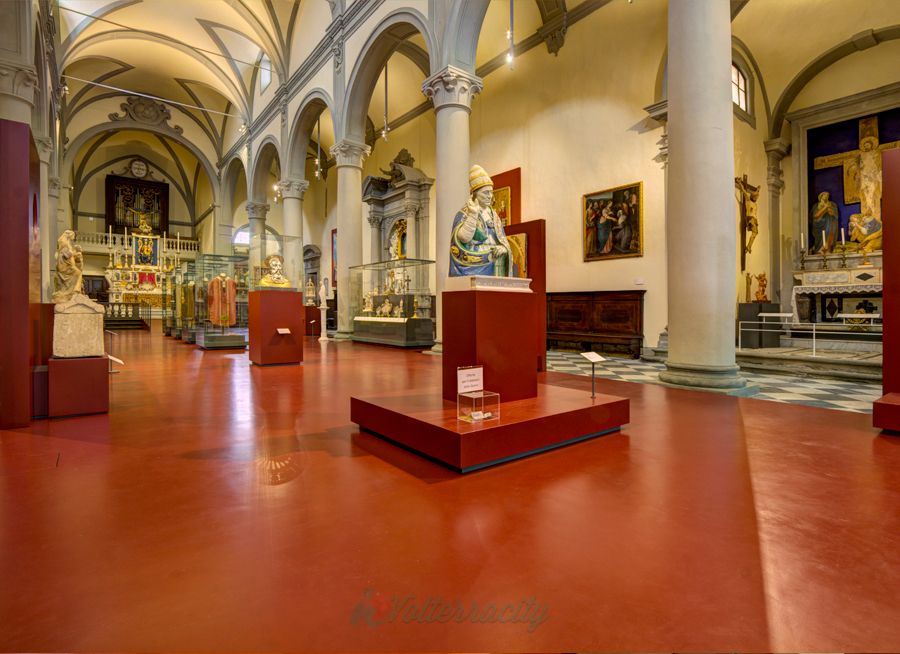
STAGE 4: SANTO STEFANO INDUSTRIAL AREA
STAY 40 MINUTES
Always before lunchtime is the time to get ready to leave the historic center.
If you have a car, you'll need to stop at the Santo Stefano industrial area. Four individual businesses operate there, and it's, poetically speaking, a small tourist village dedicated to alabaster. Alabaster workshops are scattered throughout the Municipality of Volterra, but in this concentrated area, you can see various types of workmanship, which you can learn more about by asking questions and listening to anecdotes and free curiosities from the various personalities who work here tirelessly from morning till night. These are artisan workshops, dusty, steeped in culture and tradition.
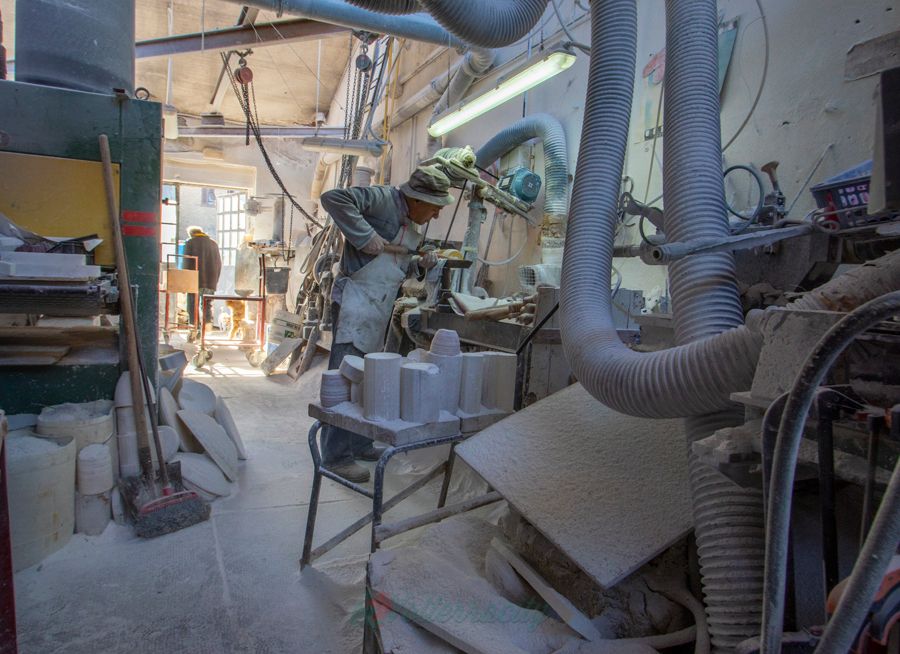
STAGE 7: BORGO MAZZOLLA
STAY 3 HOURS
Volterra's surrounding area is home to a wealth of small villages worth visiting. Mazzolla deserves special attention, a small gem nestled in the endless hills of the Val di Cecina. Rustic, secluded, and still inhabited, it boasts a trattoria right in the center of the main square, making it an excellent place to stop for refreshments. Lunchtime finally arrives! Life here is slow and, above all, intimate, where locals enjoy relaxing and engaging in simple conversation. The terrace overlooking the Berignone forest and the haughty yet charming Villa Viti are unmissable.
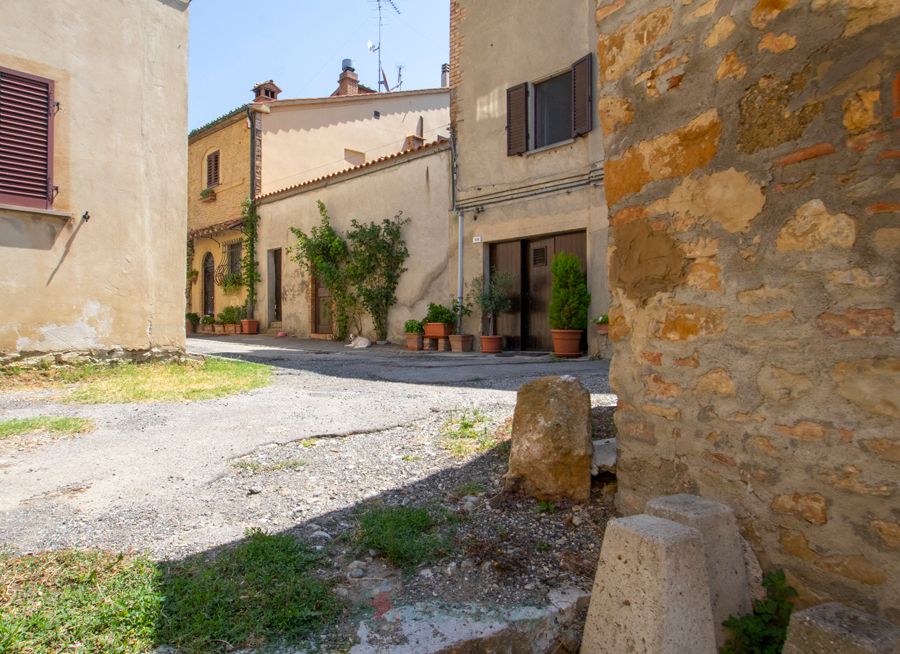
STAGE 6: SALINA LOCATELLI
STAY 1 HOUR
Very slowly, stopping every now and then at the rest areas to photograph the surrounding landscapes, move towards Saline di Volterra.
If you'd like to discover other curiosities at the edge of the municipality, the Cascata del Sale (Salt Waterfall) is noteworthy. Did you know that the salt produced in this salt mine is the purest in Italy? You can buy it and see it at its most captivating. Captivating because the salt is actually dropped from the ceiling of a large vaulted warehouse, above which pass conveyor belts that distribute the product to the various collection silos. The result is a white waterfall with a conical pool at its base, much like an hourglass. Impressive.
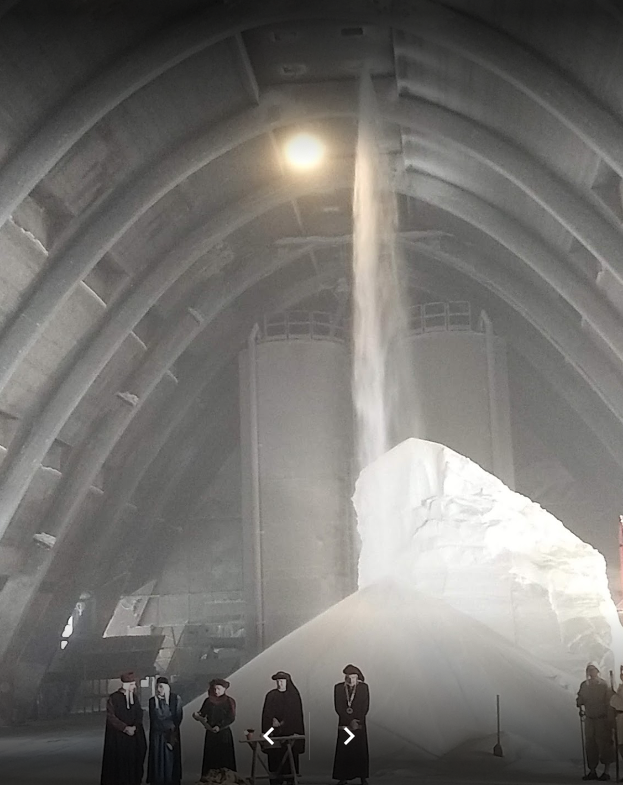
STAGE 7: PIAZZA AI FORNELLI
STAY 30 MIN
Returning to Volterra, stop for a stunning sunset in Piazza ai Fornelli. Admiring the sunset, you won't easily forget this beautiful city.
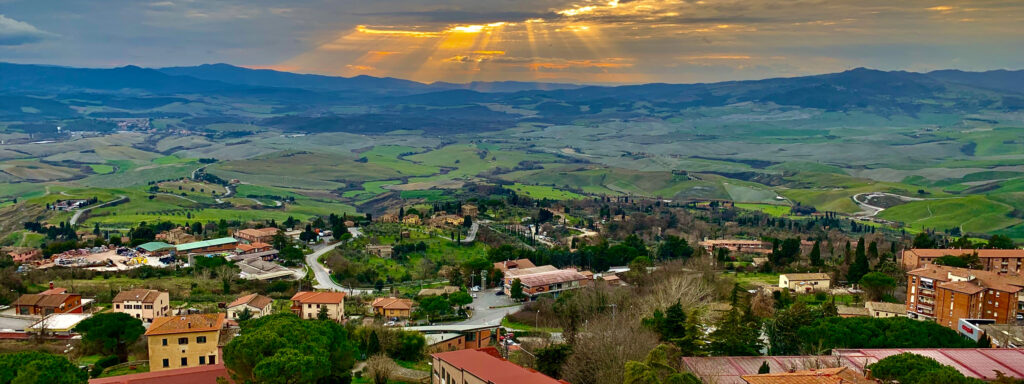
STAGE 8: DINNER AT OSTERIA FORNELLI
STAY 1 HOUR
If you're staying for dinner, it's best to stay for dinner right in front of the Osteria i Fornelli. With excellent dishes and a selection of wines, it will be an unforgettable and romantic dinner.
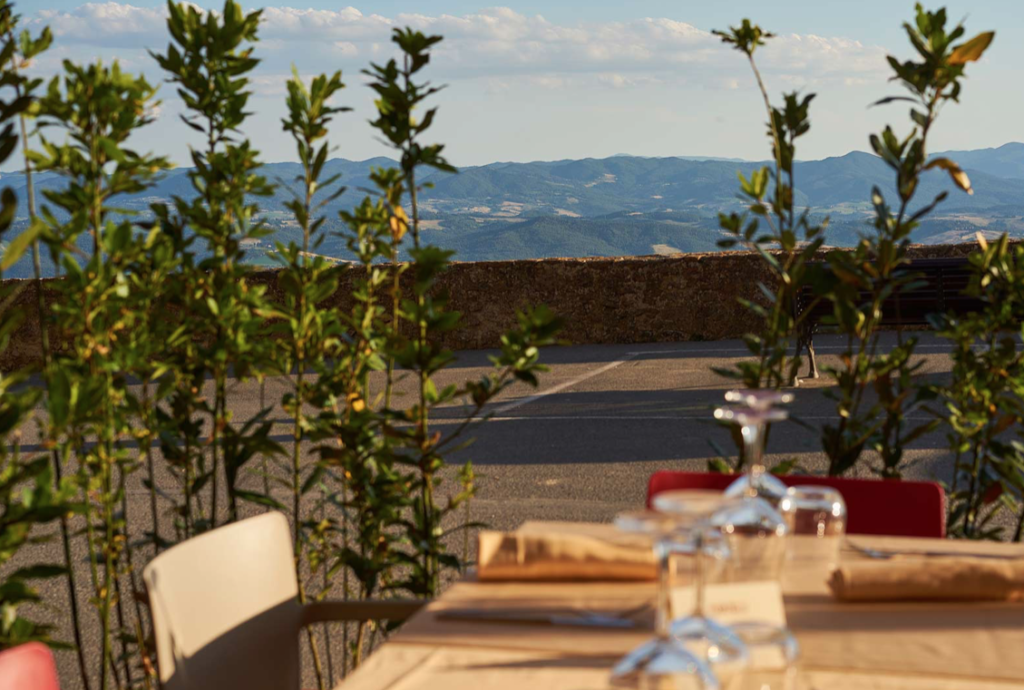
STAGE 9: LAST TOUR THROUGH THE STREETS OF THE VILLAGE 1 HOUR STAY
After a delicious dinner, why not explore the streets of the village on a final nighttime stroll through Volterra?
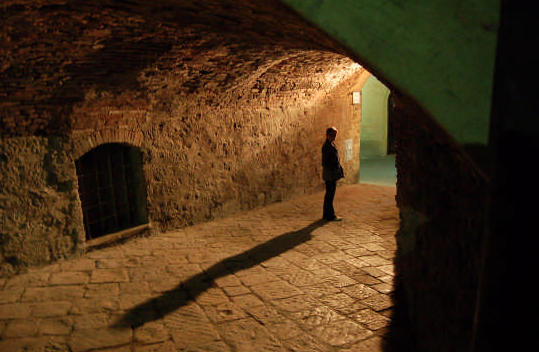
STAGE 10: THE VEIN OF WINE
INDEFINITE PERMANENCE
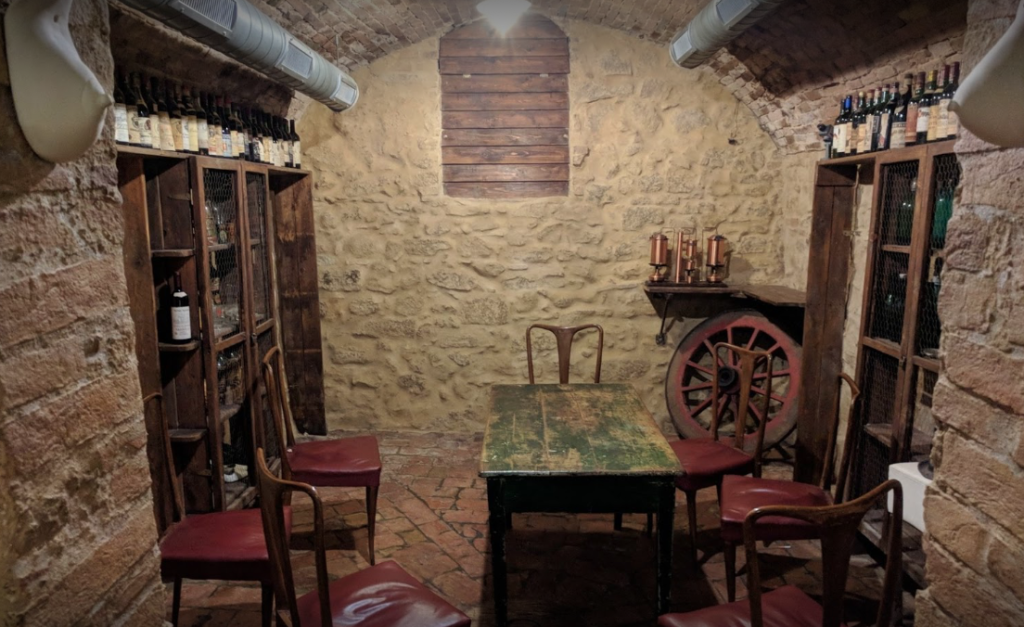
It's time for some fun, conversation, laughter, and some music. The best place to do so is at Vena di Vino, a historic venue in Volterra.